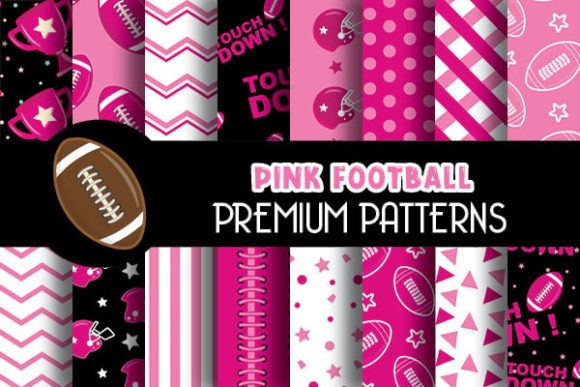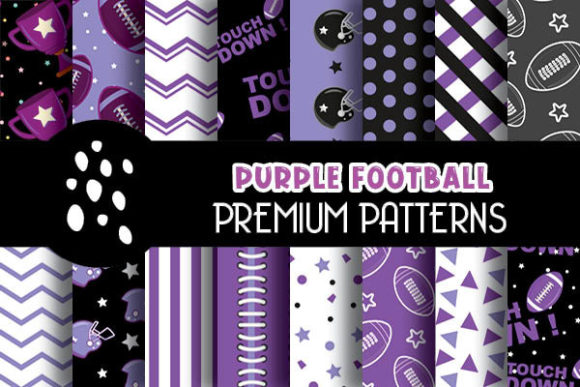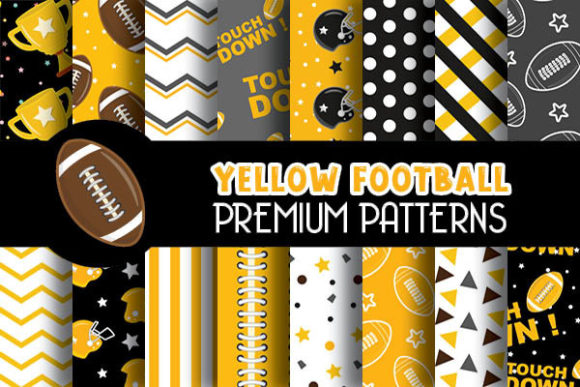
Vintage Football Digital Papers Patterns
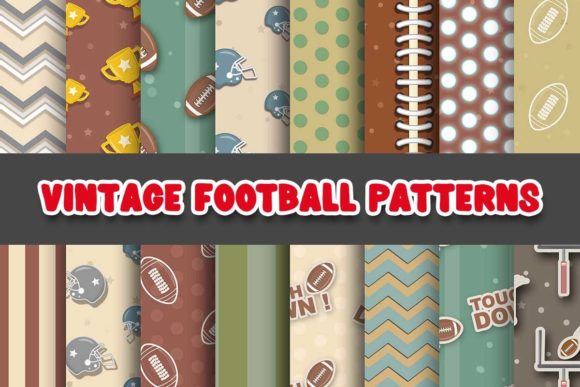
Whether you are designing a birthday invitation for a soccer enthusiast, assembling a scrapbook of matchday memories, or creating promotional materials for a youth league, the right background can transform a good project into a great one. Vintage Football Digital Papers Patterns deliver exactly that foundation: a collection of 16 distinct digital paper backgrounds, each featuring classic football motifs such as balls, stitched leather textures, retro typography, and aged parchment effects. These aren’t just generic sports graphics; they are carefully crafted patterns that bring a timeless, rugged aesthetic to any creative work. For professionals and hobbyists alike, having a reliable set of cohesive vintage football patterns means you can skip the hours of sourcing and testing, and move straight to execution.
What Makes These Digital Papers a Practical Asset
At their core, Vintage Football Digital Papers Patterns are high-resolution image files (commonly JPEG or PNG) designed to be used as backgrounds, borders, or repeating textures. The set includes patterns that range from subtle all-over prints—like faded footballs scattered across an off-white canvas—to bold, centered designs featuring a single large vintage ball with distressed edges. This variety allows you to choose the right level of visual weight for your project without needing to edit the pattern itself. The patterns are pre-built, so you can layer text, icons, photographs, or other elements on top without worrying about the background overpowering your message.
Because these patterns are digital, they integrate seamlessly into a standard creative workflow. You can import them directly into design tools such as Photoshop, Canva, Affinity Designer, or even Microsoft Word. They also work well for print-on-demand platforms like Printful or Zazzle, where you upload the pattern file and apply it to mugs, T-shirts, or phone cases. The vintage football aesthetic is particularly effective for projects that aim to evoke nostalgia, tradition, or old-school sportsmanship—think retro team uniforms, classic league badges, or heritage-style merchandise.
Where Vintage Football Digital Papers Fit in a Workflow
Understanding how to place these patterns into your process saves time and reduces rework. Consider three key phases: planning, execution, and finalization.
Before the Project: Preparation and Sourcing
During the planning stage, you often need to visualize the overall look before committing to a layout. Vintage Football Digital Papers Patterns serve as a style anchor. For example, if you are designing a set of save-the-date cards for a vintage-themed wedding sports celebration, you can sample one of the 16 patterns to set the color palette (typically earth tones, muted greens, browns, and creams) and the level of detail. This early integration helps you choose complementary fonts, embellishments, and photo filters. Instead of searching endlessly for “vintage football texture,” you have a curated library ready to preview. You can also test how the pattern behaves when scaled or rotated, ensuring it fits your intended format—whether that’s a digital invite or a printed banner.
During the Project: Direct Application
When the actual design work begins, these patterns become a rapid-fire resource. Rather than building a vintage paper effect from scratch using filters and brushes, you drag and drop the pattern onto your canvas. For instance, if you are creating a football-themed scrapbook page for a little league star, you can use one pattern as the full background sheet and another as a border strip. The patterns are designed to tile seamlessly, so you can fill larger areas without visible seams. In design software, you can adjust opacity, blend modes, or apply a color overlay to match your brand colors. Because the patterns include both tight repeats and looser layouts, you can choose the density that works best for your text readability. For a birthday invitation, a lighter pattern with dispersed balls might serve as a subtle backdrop, while a denser leather-stitch pattern works well for a trim or backing card.
After the Project: Quality Control and Variation
Once your design is assembled, you may need to produce multiple versions or sizes. The 16 patterns allow you to create a cohesive family of assets without repeating the exact same design everywhere. For example, a series of digital social media posts can each use a different pattern, yet remain unified by the vintage football theme. For printed materials, check that the pattern resolution (typically 300 DPI or higher) is sufficient for your printer. You can also repurpose the same digital paper set across different client projects or personal crafts, maintaining a consistent vintage sports aesthetic without starting over each time. This reuse is especially valuable for educators making classroom decorations or for small business owners who regularly create themed merchandise.
Practical Implementation Tips
To get the most out of Vintage Football Digital Papers Patterns, consider these workflow adjustments and best practices.
- Organize by pattern type. Within the 16 papers, some are all-over repeats, others are centered motifs, and a few have a distressed grunge feel. Sort them into subfolders named “repeats,” “motifs,” and “textures” so you can find the right pattern quickly when under a deadline.
- Test with your medium. If you plan to print, print a small sample of your chosen pattern at actual size to verify color accuracy and detail. Vintage football patterns with fine lines or small balls may look different on matte paper versus glossy cardstock.
- Layer with transparency. In digital projects, place the pattern on a layer set to “Multiply” or “Overlay” over a solid color. This lets you adjust the intensity of the vintage effect without losing the texture. Many designers keep a white or cream base layer and fade the pattern slightly for readability.
- Combine with vector assets. The digital papers are raster images, so they pair well with vector footballs, pennants, or lettering. Import the pattern as a background, then overlay your scalable elements. This hybrid approach gives you a vintage look with clean, sharp foreground graphics.
- Mind the file format. For print, use high-quality JPEG (quality 80–100) or PNG. For digital use where file size matters, you can compress JPEGs slightly. Keep an original folder with the highest resolution patterns untouched, and create a working copy folder where you resize or recolor as needed.
Real Use Cases Across Professions and Hobbies
Vintage football patterns are not limited to scrapbooking. Here is how different users integrate these 16 papers into their routines.
- Event planners and party hosts: Use the patterns to create custom invitations, thank-you cards, banners, cupcake toppers, and table signs for a football-themed birthday or Super Bowl watch party. The vintage style adds a classy, nostalgic feel that stands out from modern bold graphics.
- Small business owners and entrepreneurs: If you sell custom apparel, mugs, or phone cases, these patterns can be applied as repeating backgrounds for product lines targeting sports fans, especially those who appreciate retro vibes. A vintage football mug can become a fast seller in an Etsy shop.
- Educators and coaches: Design award certificates, team rosters, practice schedules, and classroom bulletin boards with a consistent vintage sports theme. The digital papers give a professional, finished look without requiring advanced design skills.
- Freelance designers and agencies: When a client asks for a “vintage football” aesthetic, you can immediately pull up one of the 16 patterns as a mood board starter. This speeds up the conceptual phase and helps align expectations early.
- Publishers and content creators: Blog posts about football history, retro kits, or classic matches get better engagement when accompanied by custom header images or social media templates built on these backgrounds. The patterns reinforce the content theme.
- Hobbyist scrapbookers: Preserve match-day tickets, photos, and stickers on pages that already have a cohesive vintage football backdrop. The patterns eliminate the need to find coordinating papers in a shop.
Ensuring Consistency and Long-Term Usability
Digital assets like these patterns are only valuable if they are easy to find, the files stay uncorrupted, and the resolution remains sufficient for future projects. Store the 16 digital papers in a dedicated folder with a clear name, such as “Vintage Football Patterns - 16 Papers.” If you use cloud storage (Google Drive, Dropbox, or Adobe Cloud), tag each file with keywords like “vintage,” “football,” “pattern,” and “sports background” so you can search across your library. When you download the set, check the file dimensions. Typically, 12×12 inches at 300 DPI is the standard for scrapbooking and print design; that size guarantees flexibility. If the patterns come at a lower resolution, scale them down rather than up to avoid pixelation.
For long-term use, consider creating a curated palette of colors from the patterns—extract the dominant hues using a tool like Adobe Color Capture. Then, whenever you start a new project that should match the vintage football look, you can apply those colors to text, buttons, or other design elements. This ensures visual harmony even when you combine multiple patterns from the set.
Integrating Vintage Football Digital Papers into Your Routine
To make these patterns a habitual part of your creative toolkit, keep them readily accessible. If you use Canva, upload the 16 files to a folder named “Football Papers” so they appear in your media library alongside other assets. In Adobe Illustrator, you can create a custom swatch library from a pattern file by defining it as a repeating tile. For quick mockups, store a few of the most versatile patterns in a “favorites” folder on your desktop. This removes the friction of digging through folders when inspiration strikes.
Another integration method is to create templates. For example, if you frequently design football-themed birthday invitations, make a blank invitation project with one of the vintage papers as the background, and save it as a template. Then, for each new event, you just swap the text and photo, adjust the overlay slightly, and export. This repetition saves minutes per project and yields professional consistency.
Finally, remember that these patterns are not limited to football alone. Because the designs lean heavily on vintage sports elements—balls, stitching, leather texture, aged paper—they can also complement other retro sports themes, such as baseball or boxing, especially when combined with appropriate typography. This versatility increases the return on investment for a single set of 16 papers.
From the initial spark of a project idea to the final exported file, Vintage Football Digital Papers Patterns serve as a reliable, time-saving resource. Whether you are a designer planning a full campaign, a parent creating a scrapbook, or a small business owner stocking a product line, these patterns give you a head start. The key is to treat them as a modular component of your toolkit: sample them early, apply them intentionally, and store them carefully. By doing so, you elevate the quality of your work while minimizing repetitive effort. That is the practical, process-oriented value of a well-curated digital paper set.