Tea Party Digital Papers Patterns for Creative Projects
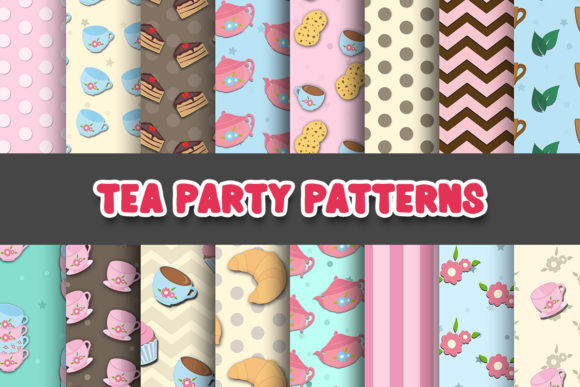
Patterns can transform an ordinary project into something memorable. Tea Party Digital Papers Patterns bring together delicate teacups, elegant florals, and charming vignettes that evoke the warmth of a classic tea gathering. Whether you are designing an invitation for a friend’s birthday, crafting a scrapbook page, or building a brand identity for a small bakery, these 16 digital paper backgrounds offer a versatile foundation. Each pattern is distinct, yet all share a cohesive theme that feels both timeless and fresh. The collection includes motifs such as teacups, saucers, teapots, sugar cubes, and flowing floral accents, all rendered in soft pastels and rich accent colors. This set is not just about decoration—it is about enabling you to communicate a mood, tell a story, or simply add a layer of polish to your work.
What Makes These Patterns Different
Digital paper sets vary widely in quality and thoughtfulness. What sets this particular collection apart is the attention to repeatability and scale. Each pattern tiles seamlessly, so you can cover large surfaces without awkward seams or distracting breaks. The resolution is high enough for both on-screen use and professional print, which matters when you are producing tangible goods like invitations or party favors. Beyond technical specs, the aesthetic itself is carefully curated. Instead of mixing random elements, every pattern stays true to the tea party theme—think dainty cups arranged in repeating rows, watercolor-style blossoms, and delicate lace-like motifs. This cohesion means you can mix and match papers within the same project without clashing styles.
Who Benefits from These Tea Party Patterns
A set like this serves different people in different ways. Understanding how it fits your own workflow can help you decide whether it matches your goals and skill level.
Hobbyists and DIY Crafters
If you enjoy scrapbooking, card making, or decorating your planner, these patterns give you a library of coordinated backgrounds without the work of creating them from scratch. You can print them at home on cardstock or adhesive paper and layer them with photos, stickers, or handwritten notes. Because the patterns are digital, you can also resize them easily to fit smaller items like gift tags or favor boxes. For a birthday tea party, you might use the teacup pattern for the main invitation and the floral stripe for the envelope liner. The variation in patterns means you can keep a cohesive look across multiple elements without repeating the exact same paper twice.
Small Business Owners and Entrepreneurs
Running a small business often means wearing many hats, including that of a designer. If you sell handmade goods, baked treats, or stationery, these digital papers can become part of your brand identity. You could use a subtle repeating teacup pattern as a watermark on product photos, or design custom labels for your tea blends using the more intricate floral backgrounds. The commercial value here is not just in the aesthetic, but in the time saved—you do not need to hire a designer or learn complex illustration software to get a professional look. A bakery owner, for instance, could create a menu card, a thank-you tag, and a social media post all from the same pattern set, ensuring brand consistency without extra effort.
Educators and Workshop Facilitators
Teachers and workshop leaders often need visually engaging materials that do not distract from content. These patterns can serve as backgrounds for presentation slides, handouts, or classroom decorations. Because they are not overly busy, they add a touch of elegance without overwhelming text or images. A preschool teacher hosting a pretend tea party activity could print the patterns on cardstock for placemats or name cards, making the experience more immersive. For older students, the patterns might inspire a lesson on pattern design, color theory, or even cultural history around tea ceremonies. The learning value extends beyond just decoration—they can be a starting point for creative projects in art or design classes.
Professional Creatives and Designers
Even experienced designers sometimes need a ready-made foundation to speed up their workflow. If you work on invitations, event collateral, or branding projects, these patterns save you the hours it would take to build a seamless repeat from scratch. You can use them as-is or modify them by overlaying text, changing opacity, or combining them with other graphics. The key advantage is reliability: you know these patterns print cleanly and tile correctly, so you can focus on composition and messaging. For a wedding invitation with a tea theme, you might use the more delicate patterns for the main card and a busier one for the envelope flap, creating visual interest without extra design time.
Evaluating Quality and Usability
When deciding whether this collection fits your needs, consider a few practical aspects that often matter to different users.
Ease of Use for Beginners
If you are new to digital crafting or design, you might wonder whether these files are easy to work with. The papers come in standard formats that open in most image editing software, including free tools like Canva or GIMP. You do not need advanced skills to drag and drop them into a project. Simply open the file, select the pattern you want, and place it in your document. Because the patterns are already seamless, you never have to worry about aligning edges or fixing mismatches. This low barrier to entry makes the set accessible even if you have never used digital paper before.
Cost and Long-Term Value
Compared to buying individual sheets of specialty paper at a craft store, a digital collection like this is often more economical, especially if you plan to use multiple patterns across different projects. One purchase gives you 16 distinct designs that you can print repeatedly, at any size, for personal or commercial use. Over time, the cost per use becomes very low. For a small business owner, this can mean the difference between buying a single-use pack of printed paper and having a reusable resource for months of product packaging and marketing materials. The long-term usefulness is high if your work frequently calls for a classic, feminine, or vintage aesthetic.
Flexibility Across Project Types
Some patterns are bold and detailed, while others are subtle and minimal. This range allows you to choose the right level of visual weight for different applications. A busy, intricate pattern might be perfect for the inside of a card where you want a surprise pop of design, but overwhelming for a small label where the text needs to be readable. Having options means you can match the pattern to the purpose. For a party invitation, you might pair a solid pastel background with a teacup border pattern, or use a floral pattern as a background with a light overlay to keep text legible. This flexibility is especially valuable for event planners or anyone producing multiple pieces for one occasion.
Practical Examples Across Audiences
Seeing how others might use these patterns can spark ideas for your own projects. Here are a few concrete scenarios.
- A hobbyist scrapbooker documents a mother-daughter tea party. She uses the teacup pattern as a full-page background, then layers photos over it with white borders. A floral pattern becomes a pocket for mementos like a tea tag or a pressed flower.
- A cake decorator wants a consistent visual theme for her social media. She takes product photos on a flat lay using a printed sheet of the lace pattern as a backdrop, giving her feed a cohesive, elegant look without styling each shot from scratch.
- A teacher prepares a unit on table manners. She prints the patterns on cardstock to create placemats for a mock tea party, helping students feel the formality of the setting while they practice etiquette.
- A freelance invitation designer receives a client request for a vintage tea-themed bridal shower. She uses the patterns to create a suite of digital invitations, a matching thank-you card, and a small banner for the event. The client loves that everything coordinates without looking mass-produced.
- A small tea shop owner designs his own gift tags and bag toppers using the patterns. He prints them at home, cuts them by hand, and attaches them to each purchase. Customers notice the extra care and often comment on the packaging.
Matching the Set to Your Needs
Before buying or downloading any digital paper collection, take a moment to reflect on what you actually need. Ask yourself a few questions. Are you working on a single project or do you anticipate using these patterns regularly? Do you need a very specific theme, or is a broad tea party collection flexible enough? How important is print quality versus screen display? If you are a beginner, you might prioritize ease of use and compatibility with free software. If you are a professional, you may care more about resolution, color accuracy, and licensing terms. This particular set balances both, but your own criteria will guide whether it is the right fit. For someone who frequently designs event materials, the theme is specific enough to be useful but broad enough to adapt for birthdays, bridal showers, baby showers, or even spring-themed content.
Creativity and Personalization
Digital papers are a starting point, not a finishing line. You can customize them further by rotating, layering, or combining patterns. Try using two different patterns in one design by placing one inside a shape or frame. Adjust the scale so a pattern appears larger or smaller depending on your layout. Change the color balance in your editing software to match your exact palette. These papers are designed to be robust enough to handle modification without losing quality. If you enjoy experimenting, the set gives you room to play without the risk of ruining a single-use physical sheet. For creators who like to push boundaries, the patterns can even be used as textures in digital painting or as backgrounds in video content, such as recipe tutorials or lifestyle vlogs.
Tea Party Digital Papers Patterns offer a practical tool for anyone who values aesthetics, efficiency, and versatility. Whether you are a weekend crafter, a busy entrepreneur, or a seasoned designer, these 16 backgrounds can elevate your work with a cohesive, charming theme. The real value lies not just in the patterns themselves, but in how they free you to focus on the creative parts of your project that only you can do.