Sea Seamless Patterns Set for Creative Projects
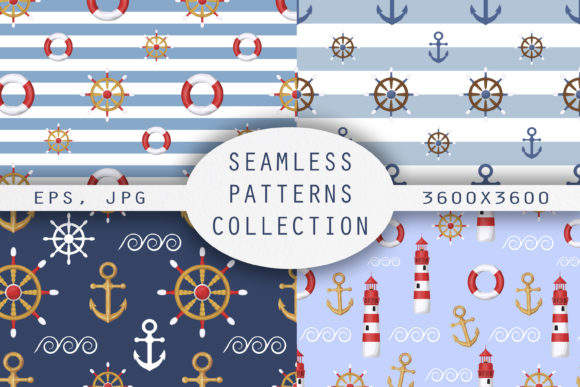
Nautical motifs never go out of style. Whether you are designing for a coastal boutique, crafting a summer collection, or building brand assets for a marine-themed product, the right pattern can anchor your work in a timeless aesthetic. The Sea Seamless Patterns Set delivers exactly that—a curated collection of vector repeats featuring wind rose, lighthouse, lifebuoy, anchor, and steering wheel. This set is built for professionals and hobbyists who need high-quality, scalable patterns without the hassle of creating them from scratch.
What makes this set particularly useful is its balance of classic maritime symbols and modern vector precision. Each pattern is provided in both EPS and JPG formats, with the JPG measuring 12 x 12 inches (3600 x 3600 pixels) at 300 dpi. That means you get print-ready resolution straight out of the box. Whether you are printing on fabric, paper, or packaging, the patterns remain crisp and consistent.
In this article, we will explore how different users—from fashion designers to small business owners—can put these patterns to work. We will also cover practical tips for adapting the patterns to various formats and audiences, so you can get the most out of your creative investment.
What the Set Includes and Why It Matters
The set contains four individual vector seamless patterns. Each pattern is built around a classic seafaring icon: a detailed wind rose, a lighthouse scene, a lifebuoy motif, an anchor design, and a steering wheel pattern. Because the patterns are seamless, they can be tiled infinitely without visible breaks—essential for fabric rolls, wallpaper, or large-format prints.
Having vector files (EPS) means you can edit colors, scale the artwork, and combine elements without losing quality. The JPG versions provide an immediate raster option for quick mockups or digital presentations. For designers who work across multiple applications, this flexibility is a time-saver.
Why Seamless Patterns Matter for Fabric and Paper
When printing on fabric or paper, a non‑seamless pattern often leads to awkward repeats that break the visual flow. A true seamless repeat ensures that the design reads as one continuous surface. For a fabric collection, this consistency helps garments or home decor pieces look professionally designed. For paper products like gift wrap or book covers, a seamless pattern creates a polished finish that customers notice.
The 300 dpi resolution further guarantees that even in large formats—like a poster or a beach towel—the details remain sharp. The 12‑inch square size is a standard for many print projects, making it easy to calculate repeat sizes for yardage or layout grids.
Creative Applications Across Different Industries
The beauty of a well‑crafted pattern set is its versatility. The same wind rose pattern that works on a fashion tee can also become a branding element for a coastal restaurant. Let’s break down practical uses by audience.
Fashion and Textile Designers
If you develop apparel collections, nautical patterns are perennial best‑sellers. The anchor pattern works beautifully on a cotton poplin shirt, while the lifebuoy motif adds a playful touch to children’s swimwear. Because the patterns are provided as vectors, you can shift the color palette to match your season—swap navy for coral in spring or use gold accents for a luxury line.
One recommendation: test the pattern scale before production. The steering wheel pattern, for example, can look bold on a dress but might need to be reduced for a scarf. Use the EPS file to rescale the repeat without losing resolution. Print a sample swatch at actual size to see how the pattern reads on the fabric drape.
Home Decor and Interior Design
Home decor is another natural fit. Seamless patterns on throw pillows, duvet covers, or curtains can transform a room into a coastal retreat. The lighthouse pattern works well for a bathroom set, while the wind rose pattern adds sophistication to a living room accent.
Consider using the patterns as a starting point for surface design on ceramics or wallpaper. Because the JPG is high-resolution, you can upload it directly to print‑on‑demand sites for pillows or mugs without additional editing. If the customer prefers a softer look, reduce opacity in your editing software to create a tone‑on‑tone effect.
Packaging and Branding for Small Businesses
Small business owners in the coastal, seafood, or travel niche can use these patterns to create cohesive packaging. Imagine a box of artisanal sea salt wrapped in the lifebuoy pattern, or a candle labeled with the anchor motif. The seamless nature lets you wrap cylindrical products like jars without a visible seam.
For branding, you can extract a single icon—say the wind rose—and use it as a logo element on business cards, then apply the full pattern on shopping bags. This creates a unified visual identity across all touchpoints. The vector format ensures your logo stays sharp when resized for social media or print.
Content Creators and Bloggers
Bloggers and influencers in the lifestyle or travel space often need custom backdrops for photography or social media graphics. A seamless pattern can be tiled as a website background, used in video titles, or printed as a photo prop. The lighthouse pattern, for example, makes an excellent background for a summer lookbook post.
You can also mix the patterns: use the steering wheel as a framed print in a styled room shot, or layer the lifebuoy pattern over a solid color for Instagram carousel slides. Because the JPG files are large, they work well for desktop wallpapers or tablet covers as giveaways.
Adapting the Patterns for Different Audiences and Formats
Not every project needs the full pattern. Sometimes a motif works better on its own. The anchor can be isolated as a simple graphic for a monogram, while the wind rose can become a repeating border on a gift tag. Here are ways to tailor the set to specific goals.
Color Adjustments for Mood and Season
The default palette likely leans toward navy, white, and red—classic nautical tones. But you can easily recolor the vector files to match a beachy pastel scheme for summer or a dark, moody palette for winter. Use the EPS files in Adobe Illustrator or a free vector editor like Inkscape to change hues while retaining the seamless structure.
For a gender‑neutral children’s range, swap bright primary colors for muted earthy tones. For a luxury stationery line, use black ink on cream paper for a vintage effect. The ability to recolor without redrawing is a major advantage of vector patterns.
Scaling and Repeating for Different Surfaces
When printing on fabric, the pattern repeat size matters. A large repeat (e.g., 12 inches) works for a beach blanket, while a small repeat (1–2 inches) suits a shirt. Since the pattern is seamless, you can shrink the entire design in your layout software—just ensure the JPG stays at 300 dpi or use the vector for infinite scaling.
For packaging, test the placement of the seam. If you wrap a box, you want the pattern to align naturally. Use the seamless tile to create a continuous wrap by aligning the edges manually or using a tiling script.
Practical Recommendations for Using the Set
Getting great results from a pattern set goes beyond just dropping it into a design. Keep these tips in mind to maintain clarity and consistency.
- Check print size early. The JPG is 3600×3600 pixels. At 300 dpi, that yields a 12‑inch tile. If you need a larger tile (say 24 inches), you will need to double the pattern by tiling two copies side by side, or use the vector to scale up. Do not simply stretch the JPG beyond 100%—it will become pixelated.
- Use the EPS for editing. The vector file gives you full control over color, stroke weight, and element placement. If a particular motif feels too dominant, you can remove it or reduce its size while keeping the seamless grid intact.
- Test on your medium. Print a small sample on your chosen fabric or paper before committing to the full run. Colors may shift between screen and print, and the pattern’s density might look different on texture.
- Combine patterns sparingly. You have four patterns. Using them all together can create visual noise. Instead, select one or two for a collection and let them serve as accents rather than the main focus.
- Consider the audience. A lifebuoy pattern might feel playful for kids’ products, while a wind rose pattern leans classic and sophisticated. Match the pattern’s personality to your brand voice.
Keeping Results Consistent and Original
One risk with any pattern set is that your project could look like someone else’s if you use the patterns exactly as provided. To stay original, customize the elements. Add your own typography over the anchor pattern, combine the lighthouse pattern with a hand‑drawn texture, or use the steering wheel as a mask for a photograph.
Consistency also comes from how you apply the patterns across a product line. If you are designing a collection of tea towels, use the same pattern in different colorways. If you are building a website, use the pattern only in limited areas—like a hero section or footer—so it doesn’t overwhelm the content.
Organizing Your Workflow
When working with multiple pattern files, keep a folder structure that separates EPS originals from exported JPGs. Name files by pattern name and color version (e.g., “Anchor_Navy_EPS”). This makes it easy to find the right file when you need to adjust a color for a new client or project. If you share the patterns with a team, provide a short style guide that shows how each pattern should be scaled and colored.
Final Thoughts
The Sea Seamless Patterns Set is more than a collection of nautical icons—it is a versatile toolkit for anyone who needs repeatable, high‑quality prints. Whether you are a textile designer planning a spring line, a small business owner launching coastal‑themed packaging, or a blogger creating custom visuals, these patterns save time while delivering professional results.
By understanding the set’s capabilities—seamless repeats, vector scalability, and multiple format options—you can adapt it to any project with confidence. Start small: pick one pattern, test it on a sample, and see how it transforms your work. With a little creativity, these sea‑inspired patterns can sail far beyond their original context.