Reviving Vintage Sewing with Paper Dress Patterns and Digital Paper Craft
There is something deeply romantic about the world of vintage sewing—the rustle of delicate fabric, the precise lines of a well-worn paper dress pattern, and the unmistakable silhouette of 1950s fashion. For modern creators, the allure lies not only in recreating these timeless garments but in rediscovering the tools and aesthetics that defined an era. Paper dress patterns, once a household staple, have experienced a quiet renaissance, now reimagined through digital paper collections that capture the essence of retro style. Whether you are a seasoned seamstress or a curious hobbyist, the combination of vintage sewing and digital resources offers an accessible path to authentic creativity.
The Enduring Appeal of Paper Dress Patterns in the Digital Age
Long before computer-aided design and PDF downloads, home sewers relied on tissue-thin paper dress patterns sold in small envelopes at department stores. These patterns, printed with mysterious symbols and multi-sized cutting lines, were the backbone of home dressmaking. They allowed women to replicate the latest fashions—from nipped waists to full skirts—without the expense of a couture dress. Today, the term paper dress patterns evokes both nostalgia and practicality. Many contemporary sewists actively seek out original vintage patterns, drawn to the precision of drafting from a bygone era and the challenge of interpreting historical sizing.
What makes vintage paper dress patterns especially valuable is their connection to specific decades. A 1950s dress pattern, for instance, tells a story of post-war optimism, with its hourglass proportions and playful details like peter pan collars or trumpet sleeves. The pattern itself becomes a historical artifact, and using it for modern sewing bridges the gap between past and present. Yet, as original patterns become scarcer and more fragile, a new solution has emerged: digital paper that mimics the look, feel, and utility of vintage pattern sheets.
Digital Paper: A Bridge Between Tradition and Innovation
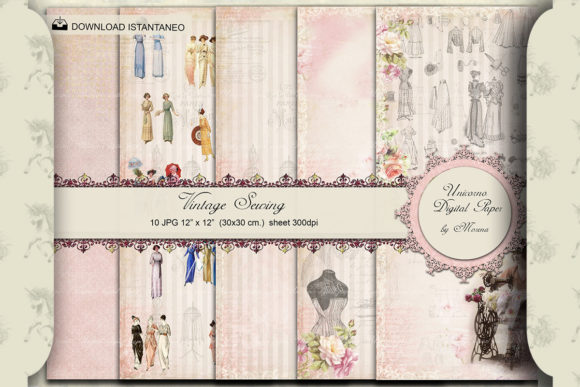
Digital paper is not a new concept, but its application within vintage sewing circles has grown remarkably. These high-resolution image files, typically offered in JPG format at 300 dpi, allow users to print pattern pieces, craft backgrounds, or create scrapbook pages with an authentic retro aesthetic. A well-crafted digital paper set, such as the paper dress patterns collection mentioned earlier, includes ten sheets of 12 x 12 inch (300 x 300 mm) imagery, perfectly suited for a range of creative projects.
The characteristics of these digital papers are worth examining. At 300 dpi, the images are sharp enough for professional printing, whether on cardstock for paper crafts or on fabric transfer sheets for textile applications. The instant download format eliminates shipping delays and environmental waste, making it an ideal choice for time-sensitive projects. And because the files are digital, they can be used repeatedly without degradation—a clear advantage over fragile vintage tissue patterns that tear easily.
Design Elements That Define the Vintage Sewing Aesthetic
To understand why digital paper inspired by vintage sewing resonates so strongly, one must appreciate the visual language of the 1950s. This decade embraced bold patterns, but also softer motifs like roses, florals, and elegant mannequin silhouettes. The juxtaposition of structured garment shapes against delicate botanical prints created a unique tension—disciplined tailoring softened by nature's grace.
In digital paper collections, these elements are often combined into cohesive backgrounds. You might find a sheet featuring a faint mannequin outline overlaid with a cascade of rose illustrations, or a grid of scissors, thread spools, and dress forms arranged in a repeating pattern. Such designs are not merely decorative; they serve as mood boards for sewing projects, inspiration for fabric selection, or even as printable wrapping paper for a sewing enthusiast friend. The best digital papers capture the patina of age—slightly muted colors, subtle texture, and the warmth of old paper—without sacrificing print clarity.
Roses, Mannequins, and the 1950s Silhouette
Roses were a recurring motif in 1950s textiles, symbolizing femininity and domestic elegance. In digital paper, these floral elements are often rendered in soft pinks, dusty reds, and cream tones, pairing beautifully with vintage sewing imagery. Mannequins, too, hold a special place in this aesthetic. They represent the formality of dressmaking—the careful draping, pinning, and fitting that transforms a flat pattern into a three-dimensional garment. When roses and mannequins appear together on a single sheet of digital paper, they evoke the atmosphere of a mid-century atelier, where creativity and precision coexist.
For someone engaged in vintage sewing, these backgrounds are more than pretty pictures. They can be used to create custom pattern envelopes, design sewing journal covers, or decorate project boxes. The visual cues of the 1950s help maintain thematic consistency across a body of work, whether you are stitching a full circle skirt dress or simply organizing your sewing space.
Practical Applications for Digital Paper in Sewing and Craft
The utility of digital paper extends beyond mere decoration. For educators and workshop leaders, these files are invaluable teaching aids. Imagine a classroom where students learn about pattern drafting by tracing over a digital paper pattern printed at full scale. The vintage-inspired background adds visual interest to an otherwise technical exercise, making the learning process more engaging. Similarly, business owners who sell handmade sewing kits can use digital paper to create branded packaging that reflects a vintage identity, setting their products apart in a crowded market.
Hobbyists, too, find countless uses. Digital paper can be incorporated into junk journals, mixed media art, or even digital vision boards for upcoming sewing projects. A crafter working on a 1950s-inspired dress might print a sheet of roses-and-mannequin paper to line the inside of a garment bag, adding a hidden detail that delights the wearer. The versatility of the format means that a single download can support a wide range of creative endeavors without the need for additional purchases.
Considerations for Choosing Digital Paper Collections
Not all digital paper sets are created equal, and those focused on vintage sewing deserve careful evaluation. Resolution is paramount. At 300 dpi, the images are suitable for both screen display and professional printing. Lower-resolution files may appear pixelated when enlarged, which undermines the authentic vintage effect. Color accuracy also matters. True vintage papers have a distinct warmth—cream rather than stark white, and muted rather than neon tones. A quality digital paper set replicates these nuances, ensuring that the final output feels genuinely nostalgic.
Another consideration is the thematic coherence of the collection. A set of ten sheets should offer variety while maintaining a unified aesthetic. Some sheets might focus on tools of the trade—scissors, measuring tape, and dress forms—while others highlight floral motifs or finished garment illustrations. The best collections allow users to mix and match sheets for layered compositions, whether in digital scrapbooking or physical collage.
The Workflow of Digital Paper in Vintage Sewing Projects
Integrating digital paper into a sewing-focused workflow is surprisingly straightforward. After downloading the files, users can import them into design software such as Adobe Photoshop, Canva, or even a simple word processor for basic resizing. For those who wish to print, common paper types include matte photo paper, cardstock, or even adhesive sheets for sticker making. The key is to match the paper weight to the intended use—heavier stock for packaging and cards, lighter stock for background sheets.
Let us consider a concrete example. A creator designing a limited-edition sewing pattern might use digital paper with a mannequin motif as the backdrop for the instruction booklet. The vintage aesthetic reinforces the pattern's historical inspiration, while the high resolution ensures that printed text remains legible. Alternatively, a sewing blogger preparing a tutorial on 1950s garment construction could use digital paper to create a visually cohesive social media post, tying together photos of the finished dress with elements of the original era.
Why Digital Paper Complements Traditional Paper Dress Patterns
Using digital paper alongside physical paper dress patterns creates a powerful synergy. The digital sheets serve as inspiration and organization tools, while the physical patterns provide the structural guidance needed for garment construction. This combination is especially valuable for those who work with vintage patterns that are no longer in print. A digital paper background can help reproduce the look of the original pattern envelope, or provide a historically accurate backdrop for photographing the finished piece.
Moreover, digital paper allows for experimentation that would be impractical with physical materials. A designer can easily scale patterns, test color combinations, or create multiple versions of a project without consuming resources. For educators, this means being able to prepare sample boards and handouts quickly, adapting them to different learning styles and skill levels.
Artistic and Commercial Value of Digital Vintage Sewing Papers
From a commercial perspective, digital paper collections offer an accessible entry point for small business owners. A shop selling handmade vintage-inspired aprons can use these designs for tags, cards, and promotional materials, building a brand identity that speaks to nostalgia and quality. Because the files are digital, inventory costs are nonexistent, and customization is limited only by the creator's imagination.
Artists and illustrators also find value in these resources. The vintage sewing aesthetic, with its emphasis on florals and fashion, translates well into greeting cards, art prints, and mixed-media pieces. By incorporating digital paper as a background layer, artists can achieve a depth of texture that would otherwise require scanning vintage materials—a process that takes time and risks damaging fragile originals. Digital paper preserves the look without the liability.
Preserving the Legacy of Vintage Pattern Making
Perhaps the most profound role of digital paper in vintage sewing is its contribution to preservation. As original pattern papers yellow, tear, and fade, their aesthetic and instructional value diminishes. Digital reproductions capture these designs in perpetuity, allowing future generations of sewists to study and appreciate mid-century garment construction. The same digital files that inspire a scrapbook page today could, in twenty years, serve as a reference for reconstructing a lost pattern design.
This interplay between ephemeral physical artifacts and enduring digital formats mirrors the broader relationship between vintage and modern sewing practices. We honor the past not by freezing it in amber, but by adapting its tools and styles to contemporary needs. Digital paper is a medium that respects tradition while embracing innovation, making the world of paper dress patterns accessible to anyone with a printer and a vision.
Selecting the Right Digital Paper for Your Vintage Sewing Project
When evaluating a digital paper package, look for collections that explicitly reference vintage sewing and paper dress patterns in their design language. The best sets will include imagery that resonates with your specific project—florals for a summer dress project, mannequins for a tailoring focus, or tool motifs for a general sewing theme. Resolution, color fidelity, and file format are all technical considerations that affect the final result, but equally important is the emotional connection you feel to the designs.
For example, a set that includes ten sheets of 12 x 12 inch images at 300 dpi, as described in the original package, provides ample material for a variety of uses. The absence of watermarks in the delivered files ensures that the imagery is clean and professional, whether used digitally or in print. The instant download feature is particularly convenient for last-minute projects, removing the friction of waiting for physical delivery.
Beyond the technical specifications, consider how the digital paper will interact with your existing materials. Will it complement your fabric choices? Does it match the era of the patterns you are using? A cohesive aesthetic elevates any project from a simple craft to a deliberate work of art. The time invested in selecting the right digital paper pays dividends in the final presentation.
The Future of Vintage Sewing in a Digital World
As more creators embrace hybrid workflows—combining digital planning with handcrafted execution—the role of digital paper will only expand. Already, we see pattern designers offering PDF downloads with layered options, printable in multiple sizes. Digital paper sits alongside these innovations as a visual companion, enriching the process from concept to completion. For those who love vintage sewing, the availability of paper dress patterns in digital formats ensures that the craft remains vibrant and relevant.
The aesthetic of 1950s fashion—roses, mannequins, and full skirts—continues to captivate contemporary audiences, not as a relic but as a living inspiration. Digital paper allows us to surround ourselves with this beauty, incorporating it into daily creative practice. Whether you are drafting a pattern, creating a marketing piece, or simply journaling about your latest project, these designs serve as a constant reminder of the elegance and craftsmanship of a remarkable era in fashion history.
In embracing both the old and the new, sewists and crafters alike discover that the heart of vintage sewing lies not in rigid adherence to the past, but in the willingness to carry its spirit forward. Digital paper is one of the tools that makes this possible, blending the warmth of memory with the precision of modern technology. The result is a creative practice that honors tradition even as it evolves, and that, ultimately, is the essence of timeless style.