Pastel Geometric Seamless Patterns: The Versatile Design Tool for Modern Creatives
Designers and content creators are constantly searching for assets that balance visual appeal with functional adaptability. Pastel Geometric Seamless Patterns have emerged as a staple in this space, offering a unique combination of soft color palettes and structured geometry that works across countless applications. Whether you are building a brand identity, designing textiles, or creating digital backgrounds, these patterns provide a foundation that is both aesthetically pleasing and technically robust.
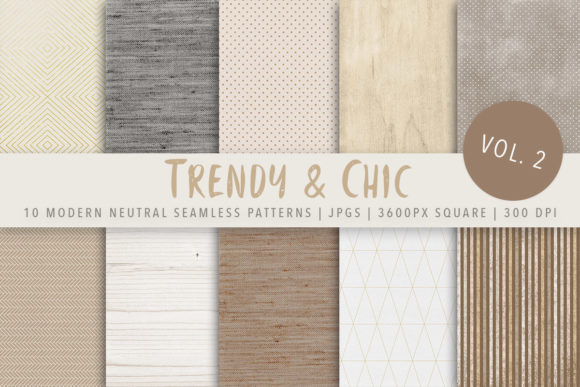
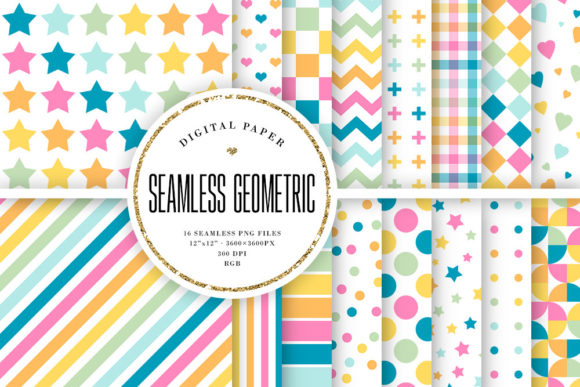
The set in question delivers 16 seamless PNG files, each measuring 3600×3600 pixels with a print dimension of 12″x12″ at 300 DPI in RGB color mode. That specification alone tells you a lot about the intended use cases. The resolution is high enough for professional print work, while the square format and seamless tiling make it easy to scale across projects without losing continuity. But beyond the numbers, what really matters is how these patterns behave in real-world design workflows and why they have become such a popular choice among illustrators, surface pattern designers, and digital marketers alike.
What Makes Pastel Geometric Seamless Patterns Stand Out
At first glance, pastel geometric patterns might seem like a niche aesthetic. However, their appeal lies in the tension between softness and structure. Pastel colors bring a sense of calm, warmth, and approachability, while geometric shapes introduce order, rhythm, and precision. This combination makes them suitable for both playful and professional contexts.
Consider the practical qualities of these patterns:
- Seamless tiling – Every file is designed to repeat flawlessly. No visible seams, no awkward transitions, no wasted time adjusting alignment. You can tile them across a page, a fabric roll, or a digital canvas without interruption.
- High resolution at 3600×3600 pixels – This is not a low-res asset meant only for screen display. At 300 DPI, you get a 12-inch print square that holds detail beautifully. For larger prints, scaling up remains crisp because the geometry is vector-quality in its clarity.
- RGB color mode – While CMYK is standard for commercial print, RGB gives you vibrant, screen-accurate colors that translate well to digital use. Many designers work in RGB first and convert later, so starting in RGB offers flexibility.
- 16 unique designs – Variety matters. With 16 distinct patterns, you have options for different moods, themes, and projects without needing to purchase multiple sets.
The combination of these characteristics means you are not locked into one type of application. A single set can serve as wallpaper for a website, wrapping paper for a product, or the backdrop for a social media campaign.
How These Patterns Fit Into Modern Design Workflows
Modern design is rarely linear. You might start a project in Adobe Illustrator, move to Photoshop for compositing, then export for both web and print. Pastel Geometric Seamless Patterns are built to move with you. Because they are provided as PNG files with transparent or solid backgrounds (depending on the design), you can layer them, mask them, and blend them without extra processing.
Here is a typical scenario: A packaging designer needs a soft, repeating pattern for a cosmetic product line. They open one of these PNG files, drag it into their layout software, and scale it to fit the box dimensions. Because the pattern is seamless and high-res, it wraps around the product without any jarring breaks. The pastel tones align with the brand’s gentle, premium aesthetic, and the geometric shapes add a modern edge that sets it apart from floral or organic patterns.
Another example comes from the world of digital content. A YouTuber or podcaster might use these patterns as background textures for video intros or social media posts. The 3600×3600 resolution ensures that even when cropped or zoomed, the pattern stays sharp. The pastel colors read well on screens and do not overwhelm text or overlays. For creators who need quick, polished assets, having a set of ready-to-use patterns saves hours of manual tile creation.
Print Applications That Benefit from High DPI
The 300 DPI resolution is not just a marketing spec. For print projects, it is the standard for producing sharp, professional results. When you output a 12″x12″ pattern at 300 DPI, every line, curve, and color transition is rendered with precision. This matters for products like:
- Gift wrap and stationery
- Fabric prints and textile samples
- Wall murals and removable wallpaper
- Product packaging and labels
- Scrapbooking and craft projects
If you have ever tried to use a low-resolution pattern for print, you know the frustration of pixelation and blur. This set eliminates that worry. You can print at the native size or scale down for smaller items, and the quality remains consistent.
Practical Benefits of Choosing Pastel Over Bold or Neutral Palettes
Pastel colors occupy a special place in design. They are not as loud as neons or primary colors, but they are not as flat as grays or beiges. They carry emotional weight without being aggressive. In the context of geometric patterns, pastels soften the rigidity of shapes like triangles, hexagons, and chevrons. A sharp diamond pattern becomes friendly and approachable when rendered in mint green, peach, or lavender.
This makes Pastel Geometric Seamless Patterns particularly effective for:
- Children’s products and educational materials
- Wellness and lifestyle brands
- Wedding invitations and event stationery
- Seasonal marketing campaigns (spring, Easter, baby showers)
- Digital planners and printable organizers
In each of these contexts, the pattern does not scream for attention; it creates atmosphere. That is the power of pastel geometry. It sets a tone without dominating the composition.
What to Consider Before Integrating These Patterns Into Your Work
No design asset is perfect for every situation. While these patterns are highly versatile, there are a few practical considerations worth keeping in mind.
File format limitations. PNG is great for transparency and quality, but it is a raster format. If you need to scale the pattern far beyond its native 3600×3600 pixels, you may notice some softening. For most print and digital work, this resolution is more than sufficient, but if you plan to print a billboard-sized mural, you will want to test the upscaling first or use a vector alternative. For typical applications like 12-inch wrapping paper, notebook covers, or tablet backgrounds, the resolution is ideal.
Color mode considerations. RGB is perfect for screens, but if your final output is CMYK offset printing, you will need to convert the files. Most modern printers accept RGB files and handle the conversion automatically, but for strict color accuracy, you should soft-proof the patterns in your design software. Pastel colors can shift slightly when converted to CMYK, so testing a sample print is recommended for commercial projects.
Seamless repetition in large formats. While the patterns are mathematically seamless, the visual repetition becomes more noticeable at larger scales. If you cover an entire wall with a single pattern, the repeating motif will be visible. This is true of any repeating pattern, not just this set. To mitigate this, you can combine multiple patterns from the set in a single layout, or use the pattern as an accent rather than a full-coverage background.
How to Get the Most Out of 16 Unique Designs
Having 16 patterns gives you creative freedom, but it also requires some curation. Not every pattern will suit every project. Here is a practical approach:
- Preview all patterns before starting. Look at the color distribution and shape complexity. Some patterns are dense with small shapes; others are more open and airy.
- Match the pattern scale to your medium. For small items like business cards, choose patterns with smaller repeats so the design reads clearly. For larger surfaces like posters, patterns with bigger geometric elements will have more visual impact.
- Layer patterns for depth. Because these are PNG files, you can stack two or more patterns at reduced opacity to create custom composites. A pastel triangle pattern overlaid with a pastel dot pattern creates a rich, custom background in seconds.
- Use them as texture bases. Place a pattern behind a text block or logo. The pastel tones provide enough contrast for readability without competing with foreground elements.
Designers who treat these patterns as building blocks rather than finished backgrounds often achieve the most distinctive results. The patterns become one layer in a larger visual system.
The Role of Seamless Patterns in Brand Consistency
Brands today need to appear cohesive across multiple touchpoints: websites, social media, packaging, print ads, and merchandise. Pastel Geometric Seamless Patterns can serve as a unifying visual element across all these channels. A fashion brand might use one pattern as the background for its spring catalog, another pattern for its Instagram highlights, and a third for its lookbook covers. Because the patterns share a similar color family and geometric language, they feel like part of the same system.
This is especially valuable for small businesses and solo entrepreneurs who may not have the budget for custom pattern design. Buying a set like this gives them instant access to professional-grade assets that elevate their visual identity without requiring hours of illustration work.
For larger studios, the patterns can be used as starting points. You can recolor them, combine them, or use them as reference for developing custom patterns. The PNG format allows you to bring them into any software that supports layers, including Procreate, Canva, Affinity Designer, and CorelDRAW.
Observations on Long-Term Usability
One question designers often ask is whether a trendy pattern set will feel dated after a season. Pastel geometric patterns have surprising staying power. The combination of soft colors and clean geometry has been popular for several years and continues to evolve with slight variations in shape complexity and color temperature. Because this set includes 16 distinct designs, you are likely to find patterns that work for both current trends and more timeless applications. The key is to avoid overusing any single pattern across all your work. Rotate through the set so your visual identity stays fresh.
Additionally, the technical specifications of these files ensure they remain usable as software and hardware evolve. 3600×3600 pixels at 300 DPI is a safe resolution that works on retina screens, high-end printers, and large format displays alike. You are not buying assets that will become obsolete with the next device update.
Final Practical Recommendations
If you are considering adding Pastel Geometric Seamless Patterns to your design library, here is a quick checklist based on common use cases:
- For digital design: Use the files directly in Photoshop, Canva, or Procreate. The RGB mode and resolution are ideal for screen output.
- For print design: Convert to CMYK if necessary, but test a small print run first. The 12″x12″ print size is perfect for gift wrap, fabric swatches, and paper goods.
- For surface pattern design: Use these as bases for developing new patterns by adding your own elements on top of the seamless tile.
- For branding: Select 2–3 patterns from the set to create a cohesive visual system across different media.
The strength of this set lies in its technical precision and creative flexibility. The seamless tile, high resolution, and soft color palette remove the most common barriers designers face when working with patterns. You are not fighting with visible seams or low resolution; you are starting at a professional baseline and building from there.
Whether you are a seasoned designer looking for time-saving assets or a beginner exploring pattern design for the first time, these files offer a solid foundation. The 16 patterns give you enough variety to experiment, while the consistent specifications mean you can trust the output every time you use them.