Botanical Patterns Wild Herb Garden: A Versatile Design Collection for Botanical Stationery and Creative Projects
The appeal of botanical imagery in stationery and paper crafts continues to grow, and for good reason. Natural motifs bring warmth, texture, and a sense of grounded elegance to everything from wedding invitations to recipe cards. Among the many options available, Botanical Patterns Wild Herb Garden stands out as a thoughtfully curated collection of seamless patterns that balances wild charm with refined design. This article explores what makes this collection distinct, how it compares with other botanical design approaches, and how to decide whether it fits your specific project needs.
What Makes Botanical Patterns Wild Herb Garden Distinct
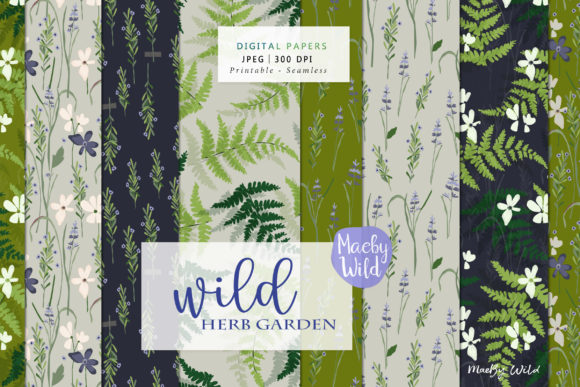
At its core, Botanical Patterns Wild Herb Garden is a set of seamless, high-resolution JPEG patterns featuring a mix of wild herbs and garden ferns. Each pattern is rendered in a restrained palette of dark navy, moss green, and stone, giving the collection a cohesive, sophisticated feel that works across multiple applications. The images are 3600 pixels square (12 x 12 inches) at 300 DPI in RGB color format, which means they are print-ready for most home and professional printing workflows while also being well-suited for digital use.
What distinguishes this collection from many other botanical pattern sets is its focus on wild, untamed plant forms rather than polished, stylized florals. The herbs and ferns feel more natural and less formal, which opens up design possibilities for events and projects that lean rustic, organic, or garden-inspired. The color palette is another differentiator. Dark navy provides depth and contrast, moss green adds an earthy, muted botanical tone, and stone offers a soft neutral that keeps the overall look from becoming too heavy. This combination is less common than the typical blush, sage, or gold palettes found in many wedding stationery collections, making it a distinctive choice for those seeking something understated yet bold.
Photographic versus Illustrated Patterns
Many botanical pattern collections rely on photographic imagery or highly detailed digital illustrations. Botanical Patterns Wild Herb Garden sits in a middle ground: the patterns are illustrated in a style that retains organic texture while avoiding the photorealism that can clash with certain paper types or printing methods. Illustrated patterns like these tend to reproduce more consistently across different printers, especially when printing on uncoated or textured paper stock, which is common for save-the-dates and garden party invitations. Photographic patterns, while stunning, sometimes lose detail when scaled or printed on matte surfaces, and they can feel less cohesive when paired with text overlays.
Seamless Patterns versus Individual Motifs
The seamless nature of these patterns is a practical advantage worth considering. Each file tiles without visible seams, which means you can cover large surfaces—such as envelope liners, menu cards, or scrapbook pages—without worrying about awkward repeats. Some botanical collections offer individual motifs or loose elements that require manual arrangement, which gives more flexibility but demands more design skill and time. If you are creating save-the-date cards or floral thank-you notes and want a consistent background texture with minimal effort, the seamless approach saves significant labor. On the other hand, if you prefer to compose your own layouts from scratch, individual motif sets might give you more creative control.
Color Palette Considerations
Color choice is one of the most decisive factors when selecting a pattern collection. The dark navy, moss green, and stone palette of Botanical Patterns Wild Herb Garden works particularly well for autumn or winter garden parties, evening events, and celebrations with a more muted, natural color scheme. It also pairs nicely with gold or copper foil accents for a touch of elegance. However, if your wedding or event leans toward bright pastels, vibrant florals, or a beachy color story, this palette may feel too subdued. In that case, you might look for a collection with lighter backgrounds or warmer botanical tones. The key is to match the pattern’s mood to your event’s overall aesthetic.
Practical Use Cases and Where This Collection Shines
The promotional material for Botanical Patterns Wild Herb Garden specifically highlights its suitability for wedding invitations, save-the-date cards, garden party anniversary celebrations, recipe cards, and floral thank-you notes. These are all applications where a subtle, repeating botanical background can enhance the design without overwhelming the text or focal elements. The dark navy background patterns, for example, work beautifully as a backdrop for white or cream letterpress text, while the moss green patterns complement handwritten or script fonts for a more informal feel.
Another suggested use is printing the patterns for collages and scrapbooking. This is a practical idea because the 12 x 12 inch size matches standard scrapbook page dimensions, and the 300 DPI resolution ensures crisp printing even on larger layouts. Using these patterns as background paper in a scrapbook or mixed-media project can create a cohesive visual theme across multiple pages. Because the patterns are seamless, you can also trim and layer them in creative ways without worrying about distracting repeats.
Strengths
- Consistency and repeatability: Seamless patterns ensure that your backgrounds look uniform across all printed pieces, whether you are making fifty invitation suites or a single scrapbook layout.
- Time efficiency: With pre-made patterns, you skip the step of designing or arranging botanical elements yourself. This is especially valuable for DIY stationery projects where time is limited.
- Print-friendly file specs: The 3600px, 300 DPI JPEG files are large enough for professional printing yet remain manageable for home printers and digital design software.
- Versatility within a cohesive set: Having multiple patterns in the same palette and style allows you to mix and match across different pieces—using one pattern for the invitation and another for the RSVP card, for example.
Tradeoffs
- Limited customization: Because the patterns are pre-designed, you cannot easily change individual elements, colors, or the arrangement of herbs and ferns. If you need a very specific botanical composition, a custom design or a collection of individual elements may be better.
- JPEG format considerations: JPEG files use lossy compression, which can introduce artifacts if repeatedly edited and re-saved. If you plan to heavily manipulate the patterns in Photoshop or another editor, you may prefer a format like PNG or TIFF that preserves quality through multiple saves. For most stationery projects, however, the JPEG quality at 300 DPI is more than sufficient.
- RGB color space: RGB is ideal for digital screens and many home printers, but professional offset printing often requires CMYK conversion. You will need to convert these files to CMYK in your design software if you are sending them to a commercial printer that requires that format. The conversion may shift colors slightly, so a test print is advisable.
When This Collection Is the Right Choice
Botanical Patterns Wild Herb Garden is a strong choice when your project calls for a natural, understated botanical look with a darker, more grounded color palette. It fits especially well for:
- Rustic, woodland, or garden-themed weddings and celebrations
- Fall or winter events where deeper colors feel appropriate
- Projects that require multiple coordinated pieces, such as full invitation suites
- DIY stationery where ease of use and consistent results matter
- Scrapbooking or collage work that benefits from a cohesive botanical background
The collection also works well for recipe cards, especially those focused on herbal or garden-to-table themes, where the herb and fern motifs reinforce the content naturally.
When You Might Consider a Different Option
There are situations where another type of botanical pattern may serve you better:
- If you need bright or pastel colors: A palette with lighter backgrounds and more saturated botanical tones will likely fit better. Look for collections with sage, blush, lemon, or lavender color schemes.
- If you require complete creative control: Individual botanical cutouts or vector elements let you build your own compositions from scratch. This is ideal if you have design experience and a specific vision.
- If your project is heading to a commercial printer requiring CMYK: Some designers prefer to start with CMYK files to avoid color conversion issues. In that case, a collection offered in CMYK or a vector format like EPS or AI may be more straightforward.
- If your event has a very formal or modern aesthetic: The wild herb and fern style leans rustic and organic. A formal black-tie wedding or a minimalist modern celebration might call for more structured, geometric, or elegantly sparse botanical patterns.
Practical Decision Factors to Consider
Before purchasing any pattern collection, it helps to evaluate your specific workflow and output needs. Here are a few factors to weigh when considering Botanical Patterns Wild Herb Garden:
- Print method: If you are printing at home or using a local print shop that accepts JPEG files, the format and resolution are ideal. For large-scale professional offset runs, confirm that your printer can work with RGB JPEGs or that you are comfortable converting to CMYK.
- Design software: These patterns work well in programs like Adobe Photoshop, Canva, Affinity Designer, and even Microsoft Word or Publisher for simpler layouts. If you use a program that does not support seamless tiling, you may need to manually arrange the pattern in your document.
- Quantity of pieces: Because the collection includes multiple patterns, you can assign different patterns to different pieces of your stationery set while maintaining a unified look. This is a practical advantage for larger sets that include invitations, reply cards, details cards, and envelopes.
- Personal style versus trend: The dark navy and moss green palette is distinctive and not as widely used as lighter botanical palettes. This can be a strength if you want your stationery to feel unique, but it is worth checking that the colors align with your personal preferences or your event’s theme before committing.
Making an Informed Choice
Ultimately, the right botanical pattern collection depends on the tone you want to set, the technical requirements of your project, and how much time you want to spend on design. Botanical Patterns Wild Herb Garden offers a practical, ready-to-use solution for anyone who wants a cohesive set of wild herb and fern patterns in a restrained, earthy palette. It balances natural charm with ease of use, making it a solid option for everything from wedding invitations to creative scrapbooking. For those whose projects demand a lighter color story, more customization options, or specific print formats, exploring other collections or design approaches may be worthwhile. By considering your project’s needs alongside the strengths and limitations of this collection, you can decide whether it is the right fit for your botanical stationery or craft work.