Animal Skins Seamless Patterns: Strategic Design Assets for Professional Projects
When you are building a brand, developing a product line, or preparing client presentations, the visual foundation you choose matters more than most people realize. Patterns are not decorative afterthoughts; they communicate tone, quality, and intention. The Animal Skins Seamless Patterns kit offers a curated set of high-resolution vector patterns that can support a range of professional applications. But like any design resource, its value depends entirely on how thoughtfully you integrate it into your workflow. This article explores the strategic role these patterns can play in your projects, when to use them, and how to avoid common mistakes that dilute their impact.
What Makes This Kit a Practical Resource?
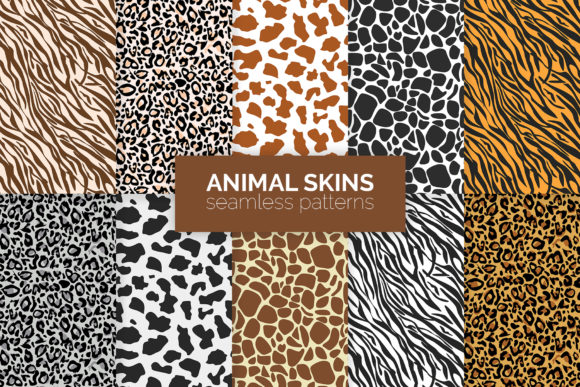
This collection includes ten seamless patterns, each provided at 5000x5000 pixels. The files come in AI, EPS, and PNG formats, with Illustrator swatches included for quick application. The patterns are handmade, meaning they carry a level of texture and authenticity that purely procedural digital patterns often lack. For professionals working on fashion concepts, object mockups, apparel previews, or branded surfaces, having a ready-to-use set of animal skin textures can save hours of manual creation time.
The resolution alone is worth noting. At 5000 pixels square, these patterns are suitable for large format presentations, high-resolution print proofs, and detailed digital previews. Whether you are designing a textile prototype or preparing a product shot for an e-commerce platform, the clarity holds up under scrutiny. The inclusion of both vector and raster formats also means you can work across different software environments without compatibility concerns.
Branding and Visual Identity Development
For brand strategists and identity designers, patterns often serve as secondary elements that reinforce a brand's personality. Animal skin patterns, when used with restraint, can communicate luxury, natural heritage, or rugged elegance depending on the context. A leather goods brand might use a subtle snake or croc pattern as an accent in packaging or stationery. A safari-inspired travel company could integrate zebra or leopard textures into their digital collateral. The key is to use these patterns as supporting elements rather than primary identifiers, allowing them to enhance rather than overwhelm the brand message.
When you approach branding with these patterns, consider the emotional response they evoke. Animal skins carry cultural associations that vary by market and audience. A pattern that signals sophistication in one context might feel dated or inappropriate in another. Testing your application with a small sample of your target audience can prevent costly missteps.
Product Mockups and Previews
If you are a product designer, marketer, or entrepreneur preparing a product launch, mockups are essential for visualization. Animal skin patterns can be applied to surfaces, apparel items, accessories, or packaging in your previews. This kit allows you to map patterns onto 3D renders or flat designs with consistency, thanks to the seamless repeat and high resolution. Instead of creating a pattern from scratch for each product variant, you can drop in a pre-made texture and adjust scale or rotation as needed.
For example, a footwear designer might use the snake pattern on a boot concept, a watch designer could apply crocodile texture to a strap, and a furniture brand might preview a chair upholstered in zebra print. Each application benefits from the pattern's handmade quality, which avoids the sterile look of purely algorithmic repeats.
Fashion and Apparel Planning
Fashion professionals often work with patterns during the concept and planning phase. Whether you are designing a collection or sourcing textiles, having a library of seamless patterns allows you to experiment with different looks before committing to fabric sampling. The Animal Skins Seamless Patterns kit can be used in mood boards, tech packs, and line sheets. It also works well for digital fashion presentations where physical samples are not yet available.
One practical approach is to use these patterns in combination with solid fabrics in your designs. A jacket might feature a patterned lining while keeping the exterior clean. An accessory line could use the pattern as an accent trim. This selective application often yields more professional results than covering an entire garment in a busy print.
Planning Before Application
The risk of using any pattern kit without clear goals is that your designs may end up looking generic or disconnected from your strategic intent. Before opening the files, take time to define what you want the pattern to communicate. Are you aiming for boldness, subtlety, luxury, or playfulness? Which animal skin aligns with that message? Leopard patterns carry a different connotation than snake or crocodile. Even within a single skin type, the color and scale of the repeat can shift the tone.
Create a brief for each pattern application. Write down the project goal, the audience, and the role the pattern will play. This simple planning step prevents you from treating the pattern as a default fallback and instead positions it as a deliberate design choice.
Building a Cohesive Collection
If you are working on a product line or brand rollout, consistency across patterns matters. The kit includes ten patterns, but you do not need to use them all. Select two or three that share a similar visual weight or color harmony, and use them across different touchpoints. For example, a snake pattern on a bag, a croc pattern on a wallet, and a leopard pattern on packaging can create a cohesive collection if the color palette is aligned. The swatches provided in Illustrator make it easier to modify colors to match your brand guidelines.
Layering and Composition
Patterns work best when they are integrated thoughtfully into your composition. Avoid placing a high-contrast animal skin pattern directly on a large area without considering how it interacts with other elements. Use the pattern as a background, an accent, or a fill for specific shapes. You can also layer it with transparency or apply it to a masked area for a more subtle effect. The seamless nature of these patterns means that when you tile them, you will not see visible breaks, which keeps the design clean.
Practical Examples for Different Creative Goals
- E-commerce product thumbnails: Apply a subtle animal pattern to the background of your product images to create a consistent aesthetic across your catalog without distracting from the product itself.
- Social media templates: Use the patterns as repeating backgrounds in Instagram story designs or carousel posts to reinforce a brand's visual identity without requiring custom artwork each time.
- Packaging die-lines: For small batch packaging prototypes, apply the pattern to a die-line template in Illustrator to visualize the final product before printing. The AI files make this straightforward.
- Presentation decks: A light animal texture on slide backgrounds or divider pages can add visual interest without overwhelming the content. Keep contrast low and legibility high.
- Digital assets for licensing: If you create assets for platforms like Print on Demand, having a set of high-resolution seamless patterns allows you to generate multiple product variations quickly.
Risks of Using Patterns Without Context
The most common mistake professionals make with pattern kits is applying them indiscriminately. Without a clear brand or product strategy, patterns can make your work look derivative. Animal skin patterns, in particular, carry strong visual associations that may clash with your intended message if not chosen carefully. A leopard print on a corporate brochure, for instance, might feel out of place. A croc texture on a children's product might feel too heavy.
Another risk is overuse. When every surface in a design features a pattern, the eye has nowhere to rest. This leads to visual fatigue and reduces the impact of each element. Instead, treat patterns as accents that draw attention to specific areas. A single patterned panel on a website header, a patterned strip on a package, or a patterned insert in a lookbook can be more effective than covering entire layouts.
Technical risks also exist. While the files are high resolution, scaling a pattern too large or too small can break the visual flow. Test your pattern at multiple sizes in your layout software before finalizing. Also, be mindful of file size when using multiple patterns in one document, especially for digital delivery. The 5000x5000 pixel PNGs are large, so optimize them for web use if needed.
Long-Term Value of a Pattern Library
Building a library of high-quality patterns is a long-term investment in your creative efficiency. This kit provides a starting point, but the real value comes from how you adapt and reuse these patterns across different projects over time. Because the files are vector-based, you can modify colors, scale, and rotation without losing quality. The swatches included in the Illustrator files allow you to maintain brand consistency across multiple applications.
For freelancers and small business owners, having a reliable pattern library means you can respond to client requests faster. Instead of negotiating custom pattern creation for every small project, you can pull from your library and adjust as needed. This speeds up production and allows you to focus on higher-level design decisions. For educators and publishers, these patterns can be used in instructional materials, presentations, and print layouts to add visual structure without requiring original artwork for every page.
Decision-Making Guidance Before You Download
Before you purchase or download this kit, ask yourself a few questions. Do you have a clear project or client need for animal skin patterns? Are you prepared to customize colors and scales to fit your brand or product line? Do you have the software to open and edit AI or EPS files? If the answer is yes on all fronts, this kit is likely to serve you well. If you are unsure about the application, consider starting with one or two patterns to test before committing to the full set.
Also consider the long-term use. Patterns in neutral tones with moderate contrast tend to remain usable across more projects than high-contrast or heavily saturated options. If you have the ability to recolor the swatches, you can extend the life of these patterns indefinitely. The handmade quality of the textures also means they are less likely to look dated than fully synthetic repeats, which can appear flat or artificial over time.
Final Observations
The Animal Skins Seamless Patterns kit is a practical tool for professionals who need reliable, high-resolution textures for their work. Its value is not in the patterns themselves, but in how they are used. When integrated with clear goals, consistent branding, and thoughtful composition, these patterns can elevate your projects from functional to compelling. When used without direction, they risk becoming visual noise. Approach them as you would any design resource: with intent, context, and a clear understanding of what you want to communicate. That is where the real return on investment lies.